

TradingView webhooks are one of the most powerful features available to retail traders looking to automate their strategies. In this guide, we break down exactly how webhooks work and how you can use them for automated trading.
What Is a Webhook?
A webhook is an HTTP callback — a simple way for one application to send real-time data to another. When your TradingView alert fires, it sends a POST request containing a JSON payload to a URL you specify. This URL is your automation platform's webhook endpoint.
How the Flow Works
- You create a strategy or indicator in TradingView using Pine Script. This could be anything: a moving average crossover, an RSI divergence detector, or a complex multi-timeframe system.
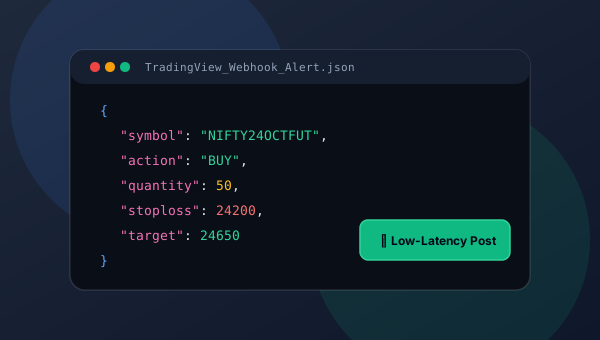
- You set up an alert on that strategy. In the alert configuration, you specify the webhook URL and a JSON message body containing order details like symbol, action (BUY/SELL), quantity, stop loss, and target.
- When conditions are met, TradingView fires the alert and sends the JSON payload to your webhook URL.
- The automation platform receives the webhook, validates the payload, applies your risk rules (quantity limits, SL/target checks, session timing), and routes the order to your connected broker via API.
- The order is placed at your broker within milliseconds. You receive confirmation and the execution is logged for your records.
Example Webhook Payload
{
  "symbol": "NIFTY23OCTFUT",
  "action": "BUY",
  "quantity": 50,
  "orderType": "MARKET",
  "stoploss": 19200,
  "target": 19500
}
Key Considerations
- Latency matters: Choose an automation platform with low-latency webhook processing.
- Risk management is essential: Always set stop loss and position limits.
- Test before going live: Use paper trading mode to validate your setup.
- Broker API limitations: Each broker has different API rate limits and order types.
Important Disclaimer
Automation does not eliminate trading risk. All strategies carry risk of loss. Ensure you understand your strategy's risk profile and set appropriate risk parameters before enabling live automation.